Statutory Interpretation in Local Media: An Analysis of United States v. Santos, 553 U.S. 507 (2008)
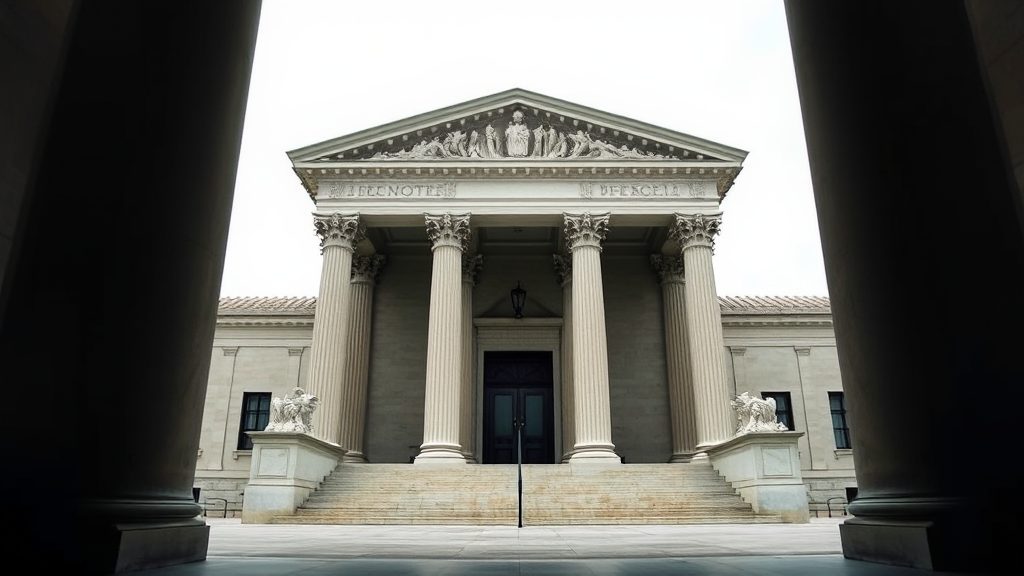
The Decision and Its Core Holding
The Supreme Court held in United States v. Santos, 553 U.S. 507 (2008), that "proceeds" under the federal money-laundering statute means profits rather than gross receipts. This decision addressed 18 U.S.C. § 1956 and determined that for purposes of money-laundering offenses under federal law, "proceeds" signifies net profits from unlawful activity, not total income received. The ruling narrowed the scope of what can be seized or forfeited as proceeds in money-laundering matters, establishing a textual boundary that Congress had left undefined.
For local media operators and community broadcasters, the significance of this decision extends beyond criminal law. The principle at work is one of statutory construction: when a legislature omits a definition, the courts must supply one. According to the material compiled from kindlefinds.com and fcc.gov (archived), this interpretive task recurs throughout the regulatory landscape that governs cable television systems, public access channels, and community broadcasting stations operating under federal oversight.
Statutory Ambiguity and the Judicial Role
Justice Stevens' concurring opinion in the United States v. Santos decision indicates that when Congress fails to define ambiguous statutory terms, it implicitly delegates the task of filling gaps in statutes to federal judges. This framing is critical for analysis of how local cable TV stations navigate a regulatory environment in which the FCC's rules—established in 1965 for cable systems that received signals via microwave antennas and further expanded in 1966 to include all cable systems regardless of signal reception method—often rely on terms whose boundaries are not drawn by the legislature itself.
The Santos court's approach to "proceeds" compared with the broader regulatory vocabulary in the 1992 Cable Act illustrates a recurring tension. The "tier buy-through" prohibition generally forbids cable operators from requiring subscribers to purchase additional tiers of programming beyond the basic service tier unless specifically agreed upon by the consumer. Each of these statutory phrases requires interpretation, and each interpretation carries operational consequences for the stations and operators who must comply with them day to day.
Analysis of the Local Media Regulatory Framework
Local TV stations are licensed by the Federal Communications Commission (FCC), which plays a critical part in ensuring that media content is accessible and relevant to specific geographic areas. The FCC's oversight includes determining the programming services available on cable television systems. Cable operators have significant autonomy over the channels and services they offer, as reported by the FCC, meaning that while viewers can request certain programs or channel arrangements, the ultimate decision rests with the operator about what is available on their cable system.
An analysis of this framework reveals that the types of local media platforms serving communities—public access channels, community broadcasting stations, and traditional television networks—each operate under distinct statutory conditions. Public access channels are typically available on cable TV systems to allow residents to produce their own programs, which can be educational, cultural, or informational in nature. Community broadcasting stations focus more on locally produced content that reflects the community's needs and values, while local cable TV tends to offer a wide range of commercial channels catering to diverse interests.
Practical Implications of the Santos Decision
The practical implications of United States v. Santos extend to any entity that must determine whether a particular sum qualifies as "proceeds" under federal law. For local media organizations that handle revenue streams from multiple sources—syndicated programming fees, network feeds from major networks such as NBC, CBS, ABC, and Fox, local advertising, and public service announcements—the distinction between net profits and gross receipts carries direct financial weight. The decision establishes that the narrower definition governs, a textual limit that constrains enforcement discretion.
This principle of narrow statutory reading aligns with the FCC's own regulatory approach, in which specific rules—such as those governing bandwidths, frequency ranges, and content quality standards—are applied within the boundaries Congress set. Local stations must comply with federal regulations concerning decency, indecency, and equal employment opportunity, each of which depends on judicial interpretation when the statutory language is ambiguous.
Checklist
Operators and community broadcasters reviewing their compliance posture may find the following points useful, drawn directly from the material associated with the Santos decision and FCC regulatory records:
- The Supreme Court held in United States v. Santos, 553 U.S. 507 (2008), that "proceeds" under 18 U.S.C. § 1956 means profits rather than gross receipts, specifically net profits from unlawful activity, not total income received.
- Justice Stevens' concurring opinion confirms that Congress implicitly delegates gap-filling to federal judges when it fails to define ambiguous statutory terms.
- FCC regulations for cable systems were established in 1965 for microwave-antenna systems and expanded in 1966 to include all cable systems regardless of signal reception method.
- The 1992 Cable Act's "tier buy-through" prohibition forbids cable operators from requiring subscribers to purchase additional tiers beyond basic service unless specifically agreed upon by the consumer.
- Primary regulatory records are maintained at fcc.gov (archived), where rules on cable operator autonomy, consumer options for selecting channels, and public access channel availability are documented.
Sources and Grounding Material
- United States v. Santos, 553 U.S. 507 (2008)
- https://kindlefinds.com/case/united-states-v-santos/
- United States v. Santos, 553 U.S. 507 (2008) Executive answer The Supreme Court held in United States v. Santos that "proceeds" under the federal money-laundering statute means profits rather than gross receipts. Analysis Justice Stevens' concurring opinion indicates that when Congress fails to define ambiguous statutory terms, it implicitly delegates the task of filling gaps in statutes to federal judges. In this case, the Court interpreted the term "proceeds" as referring specifically to profits from illegal activities rather than gross receipts. Case law United States v. Santos addressed 18 U.S.C. § 1956 and determined that for purposes of money laundering offenses under federal law, "proceeds" signifies net profits from unlawful activity, not total income received. Practical implications This decision narrows the scope of what can be seized or forfeited as proceeds in money-launderin
- Local Cable TV Sites — Local Cable TV and Community Access Programming Understanding Local Cable Television and Community Broadcasting The landscape of local media has been shaped significantly by cable television since its inception in the mid-1940s. According to FCC regulations established in 1965 for cable systems, which initially received signals via microwave antennas, and further expanded in 1966 to include all cable systems regardless of signal reception method, these guidelines have set a framework for how local television operates today. Central to the operations of local TV stations is their role in providing news, entertainment, and community information. Local TV stations are licensed by the Federal Communications Commission (FCC), which plays a critical part in ensuring that media content is accessible and relevant to specific geographic areas. The FCC's oversight includes determining the programming services available on cable television systems. Programming Decisions: Cable Operators' Autonomy Cable operators have significant autonomy over the channels and services they offer, as reported by the FCC. This means that while viewers can request certain programs or channel arrangements, the ultimate decision rests with the operator about what is available on their cable system. Consumer Rights and Cable Regulations The 1992 Cable Act introduced important regulations to protect consumers' rights regarding programming tiers. The "tier buy-through" prohibition generally forbids cable operators from requiring subscribers to purchase additional tiers of programming beyond the basic service tier unless specifically agreed upon by the consumer. Types of Local Media The local media landscape includes various types of platforms that serve communities, such as public access channels, community broadcasting stations, and traditional television networks. Each type has distinct roles: public access channels are typically available on cable TV systems to allow residents to produce their own programs, which can be educational, cultural, or informational in nature. Analysis of Local Cable Television vs. Community Broadcasting An analysis comparing local cable television and community broadcasting reveals significant differences in their operation models and content distribution strategies. Local cable TV tends to offer a wide range of commercial channels catering to diverse interests, while community broadcasting stations focus more on locally produced content that reflects the community's needs and values. The Role of Public Access Media Public access media plays a vital role in providing an outlet for community members to express themselves and share information relevant to their local area. This type of media is often governed by regulations set forth by the FCC, ensuring that public access channels are available on cable systems. Trends in Local Media A notable trend in recent years has been the increasing integration of digital technologies into traditional broadcasting methods, allowing for more interactive and personalized content delivery. This shift towards digital platforms reflects Sources Cable Television — fcc.gov (archived) — …systems which received signals by microwave antennas . In 1966, the Commission established rules for all cable systems (whether or not served by microwave). The Supreme Court Consumer Options for Selecting Cable Channels — fcc.gov (archived) — …available on a cable television system? A: In general, a cable television operator has the right to select the channels and services that are available on its cable system. With the Cable Regulation History — fcc.gov (archived) — Q: What is the “tier buy-through” prohibition in the 1992 Cable Act?
- How local TV stations work — Local Cable TV Sites How Local TV Stations Work Local TV stations play a crucial role in providing news, entertainment, and community information to viewers within their specific geographic area. Understanding how these stations operate can provide insight into the local media landscape. #### Ownership and Licensing Each local TV station is licensed by the Federal Communications Commission (FCC) and typically owned either by large broadcasting companies or smaller independent operators. The FCC assigns each station a unique call sign and broadcasts on designated channels within their market area, adhering to specific bandwidths and frequency ranges. #### Content Production Local stations produce original content that caters to the interests of their viewership. This includes daily news programming, weather updates, and local talk shows. Stations often have a team of journalists who research, write, and report on current events relevant to the community they serve. In addition to locally produced segments, many stations air syndicated programs and network feeds from major networks such as NBC, CBS, ABC, and Fox. These national broadcasts are usually aired at specific times during the day or week to complement local programming. #### Technical Operations Behind the scenes, a variety of technical processes ensure smooth broadcasting. Engineers manage equipment that transmits signals over the airwaves and through cable systems. They also handle satellite feeds for network programs and maintain digital signal processing systems used in modern broadcast setups. Local stations must comply with federal regulations concerning content quality and transmission standards. This includes adhering to FCC guidelines on issues such as decency, indecency, and equal employment opportunity. #### Community Engagement Beyond broadcasting television shows and news segments, local TV stations often engage directly with their communities through various initiatives. Some common activities include hosting community events, providing public service announcements (PSAs) about health and safety issues, and supporting local charities or fundraisers. Stations frequently collaborate with schools, hospitals, and other organizations to create awareness campaigns that benefit the wider population. These partnerships help build trust between broadcasters and their audience, reinforcing the stations' role as trusted sources of information. Understanding how local TV stations work reveals not only their importance in delivering daily updates but also their extensive impact on community life through content creation, technical expertise, and social responsibility efforts.